As a regular user of autoclaves, have you ever been confused by this situation: you placed chemical indicator cards in accordance with the procedures, and they showed “qualified” after sterilization, yet incomplete sterilization was found in subsequent culture tests? The problem may lie in an easily overlooked detail—is the chemical indicator card you use truly matched to the sterilization process in operation?
I. Why is “matching” so crucial?
Core logic: Chemical indicator cards are targeted monitoring tools, not universal consumables.
Different sterilization processes feature distinct combinations of temperature, time and pressure parameters, and chemical indicator cards are designed based on specific temperature-time thresholds. Each card strictly corresponds to a specific set of sterilization parameters—only when the temperature and time of the sterilization process exactly meet the card’s “trigger criteria” will it accurately indicate “sterilization achieved” through a color change (e.g., from yellow to black).
For example:
121℃ gravity displacement sterilization: A standard temperature process suitable for most moisture-resistant items, with a sterilization time of 15-30 minutes.
134℃ pre-vacuum sterilization: A high-temperature, rapid process for items with high temperature tolerance, with a sterilization time of 3-5 minutes.
Rapid sterilization process: Short-duration, high-temperature sterilization for small-batch, urgent sterilization scenarios.
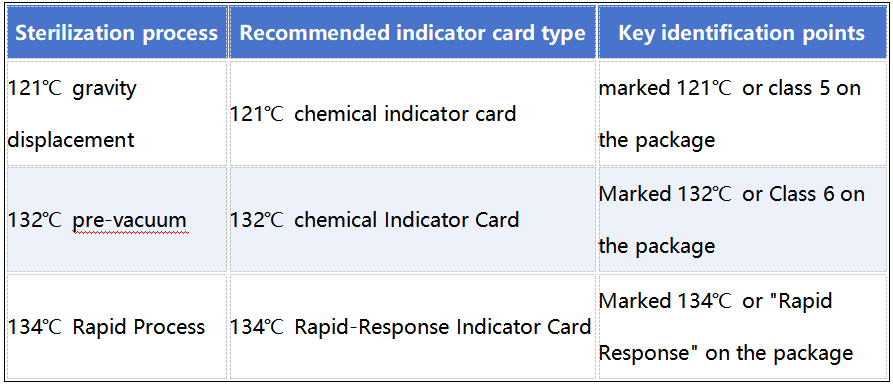
II. How to select the right matched indicator card?
III. Common Misconceptions and Corrections
❌ Misconception 1: “Color change means sterilization is qualified.”Correction: A color change only indicates exposure to high temperature, not that the required duration of sterilization and saturated steam conditions have been met. It is essential to ensure the color change matches the standard color block (e.g., a uniform change from yellow to black).
❌ Misconception 2: “All indicator cards are basically the same.”Correction: Indicator cards for different temperature processes vary significantly in chemical formulation and color change thresholds. Using the wrong card may result in minor issues such as wasted consumables, or severe consequences like sterilization failure and even infection risks.
❌ Misconception 3: “If biological monitoring is qualified, the indicator card doesn’t matter.”Correction: Biological monitoring is the gold standard but is time-consuming and costly. Chemical indicator cards are a necessary means of per-cycle monitoring—the two are complementary and irreplaceable.
IV. Our Recommendations
1.Establish an indicator card management ledger: Record the batch number, expiration date and applicable process of each batch of indicator cards to avoid mixed use.
2.Conduct regular operator training: Ensure every user clearly knows which card to use for which process.
3.Place an indicator card in every sterilization cycle: It is recommended to place the card inside the sterilization pack, at the hardest-to-sterilize position, rather than just in the autoclave chamber.
4.Perform regular comparative verification: Conduct a comparative test between chemical indicator cards and biological monitoring at least once a quarter.
Monitoring of autoclaves may seem simple, but it is of great importance. Selecting the right indicator card is the first line of defense to ensure effective sterilization. “Safety is no trivial matter”—let every sterilization be truly reassuring.







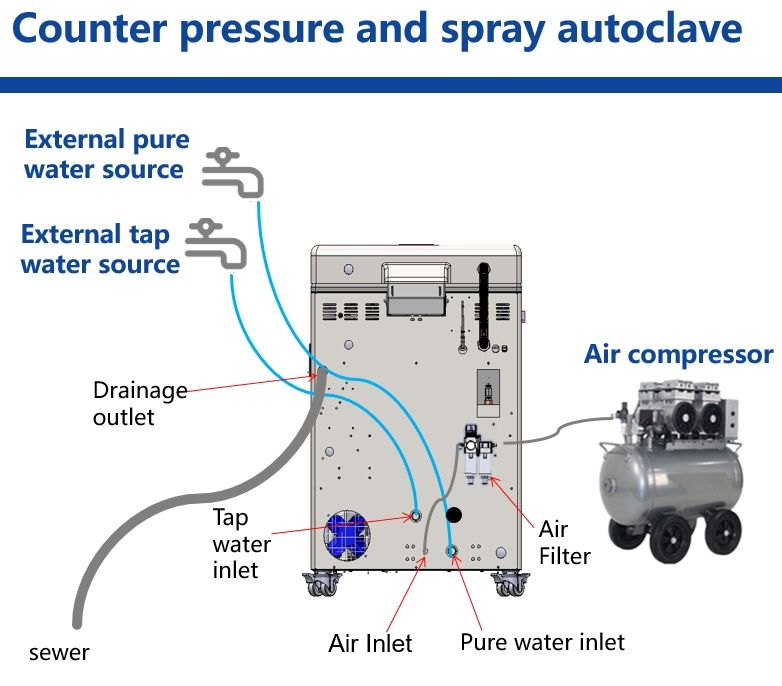










ZEALWAY provides quality autoclaves, full services and professional sterilization solutions for you.

Leave a Reply