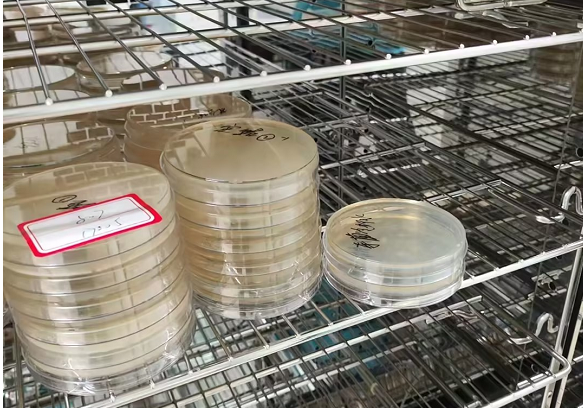
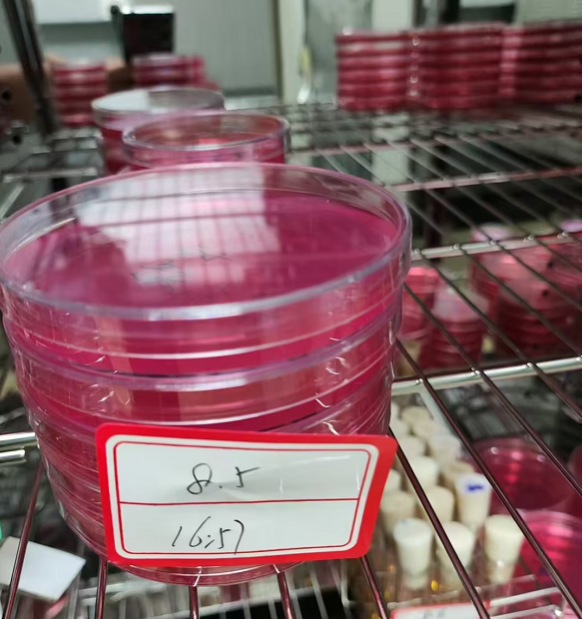
In microbiology laboratories, the placement of culture dishes during microbial cultivation critically impacts the accuracy of experimental results. 一、 The standard practice of inverting culture dishes during microbial cultivation serves the following purposes:
Preventing moisture condensation and preserving colony integrity Inverting plates prevents moisture condensation from dripping onto the culture medium through the inner surface of the lid, thereby preserving colony integrity. This simple adjustment not only safeguards the microbial growth environment but also enhances counting accuracy.
Maintaining Optimal Humidity for Ideal Growth Conditions Inverted placement effectively slows moisture evaporation, providing microorganisms with a humid growth environment conducive to their growth and reproduction.
Reduce contamination risks and protect culture purity Inverted plates minimize the chance of airborne impurities or microorganisms settling onto the culture medium, thereby lowering contamination risks. This provides a cleaner and safer cultivation environment for experiments.
Enhance operational convenience and experimental stability Inverted dishes remain more stable during movement or transfer, minimizing the risk of accidental spills from collisions. This orientation also facilitates observation and documentation of colony growth, improving both convenience and safety in experiments.
Facilitates Nutrient Enrichment and Observation/Counting Inverted culture promotes nutrient enrichment on the surface of the medium, supporting microbial growth and reproduction. Furthermore, the more concentrated distribution of colonies facilitates easier identification of colony characteristics, simplifying observation and counting. 二、 Reasons for Upright Placement of Petri Dishes in Microbial Cultivation
In mold and yeast cultures, after agar solidification, plates (petri dishes) are placed upright.This practice prevents mold spores from accumulating at the lid’s edge and leaking through gaps when plates are inverted, which could contaminate adjacent plates or the entire incubator. Upright placement thus complies with standard protocols while effectively preventing spore leakage, reducing cross-contamination risks, and ensuring experimental accuracy and a clean culture environment. The proper placement of petri dishes during microbial culture not only prevents condensation droplets from damaging colonies but also effectively reduces contamination from airborne microorganisms, ensuring a pure culture environment. Whether to place dishes upright or inverted depends on the characteristics of the culture medium and the experimental objectives. Regardless of the method chosen, our goal remains to provide microorganisms with the most suitable growth environment, thereby obtaining accurate and reliable experimental results.





































Leave a Reply